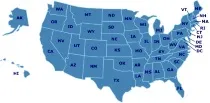
As the number of high school students who are homeschooled continues to rise, leaders in high school sports across the country face growing interest among these students and their parents to play sports on their local public school teams. Interest continues to build in homeschoolers’ participation on public schools sports teams. In some states, that option exists, although the requirements vary from state to state with some states requiring part-time enrollment in the local school. In other states, the debate continues as to whether homeschooled students should be allowed to play on the local high school team alongside students who attend classes at the school all day long.
Are you working fulltime and feeling as though you and your children have been left out of the homeschool loop? Are you a single parent concerned you might not be able to meet the demands of homeschooling? Does your child have special needs? Dell's Place has established a network for working moms, single parents, and the rest of us who struggle to pull it all together. The purpose of this network is for support and encouragement, but it's also to offer real solutions from other parents who struggle with the same issues.
This discussion list is for homeschoolers teaching preschool and kindergarten. Topics include curriculum selection (whether necessary or not), teaching tips, creative learning ideas, time management, unit studies, homeschooling books, neat craft ideas, cooking tips for all occasions, support those who have homeschool burn out, or those who are just starting to homeschool.
An interview with John Holt from 1980 from The Mother Earth News. Holt discussed his own schooling experiences, how he discovered the key to real learning, and how the idea of homeschooling developed. He also discussed some concerns that parents new to the idea of homeschooling have. There is a short description of some of the legal issues that homeschoolers have faced and where the homeschooling movement is headed.
The College Board is a not-for-profit membership association whose mission is to connect students to college success and opportunity. Founded in 1900, the association is composed of more than 4,700 schools, colleges, universities, and other educational organizations. Each year, the College Board serves over three and a half million students and their parents, 23,000 high schools, and 3,500 colleges through major programs and services in college admissions, guidance, assessment, financial aid, enrollment, and teaching and learning. Among its best-known programs are the SAT, the PSAT/NMSQT®, and the Advanced Placement Program®(AP).